


Accurate solar resource data is the foundation of every successful solar project. Even small differences in resource estimates and data uncertainty can have outsized financial implications, influencing both downside risk and potential upside through improved project confidence and outcomes.
That’s where SolarAnywhere® Site-Adaptation Studies come in.
By combining high-quality, site‑specific ground measurements with SolarAnywhere’s long‑term satellite data, Site-Adaptation Studies deliver a more accurate, lower‑uncertainty view of a project’s true solar resource—helping developers, owners and financiers make better, more confident decisions.
What is a SolarAnywhere Site‑Adaptation Study?
SolarAnywhere Site-Adaptation (also known as ground-tuning) Studies combine the strengths of two complementary data sources:
- High‑accuracy, site‑specific ground measurements collected over a defined campaign period
- Long‑history SolarAnywhere satellite‑derived irradiance and weather data, extending back to 1998
Clean Power Research® analysts compare ground and satellite data from the same time period to identify and correct site‑specific biases, seasonal effects and clear-sky versus cloudy‑sky behavior. Those corrections are then applied consistently across the full historical dataset.
The result is a tuned, long-term time‑series dataset with lower uncertainty than either ground or satellite data alone—providing a more realistic picture of long‑term resource availability and variability.
Why uncertainty matters in solar development
Solar projects are financed, built and valued based on modeled energy production. The models depend heavily on solar resource inputs, and uncertainty in those inputs propagates directly into:
- Energy yield estimates (P50, P90 and beyond)
- Debt sizing and coverage ratios
- Financing terms and cost of capital
- Off‑taker agreements and bid competitiveness
- Long‑term revenue projections
Even marginal reductions in resource uncertainty can unlock significant project value. Lower uncertainty reduces downside risk for lenders, increases confidence in long-term performance and ultimately supports more favorable financing outcomes. See Figure 1 below.
Figure 1: SolarAnywhere Site Adaptations Reduce Solar Resource Bias and Uncertainty
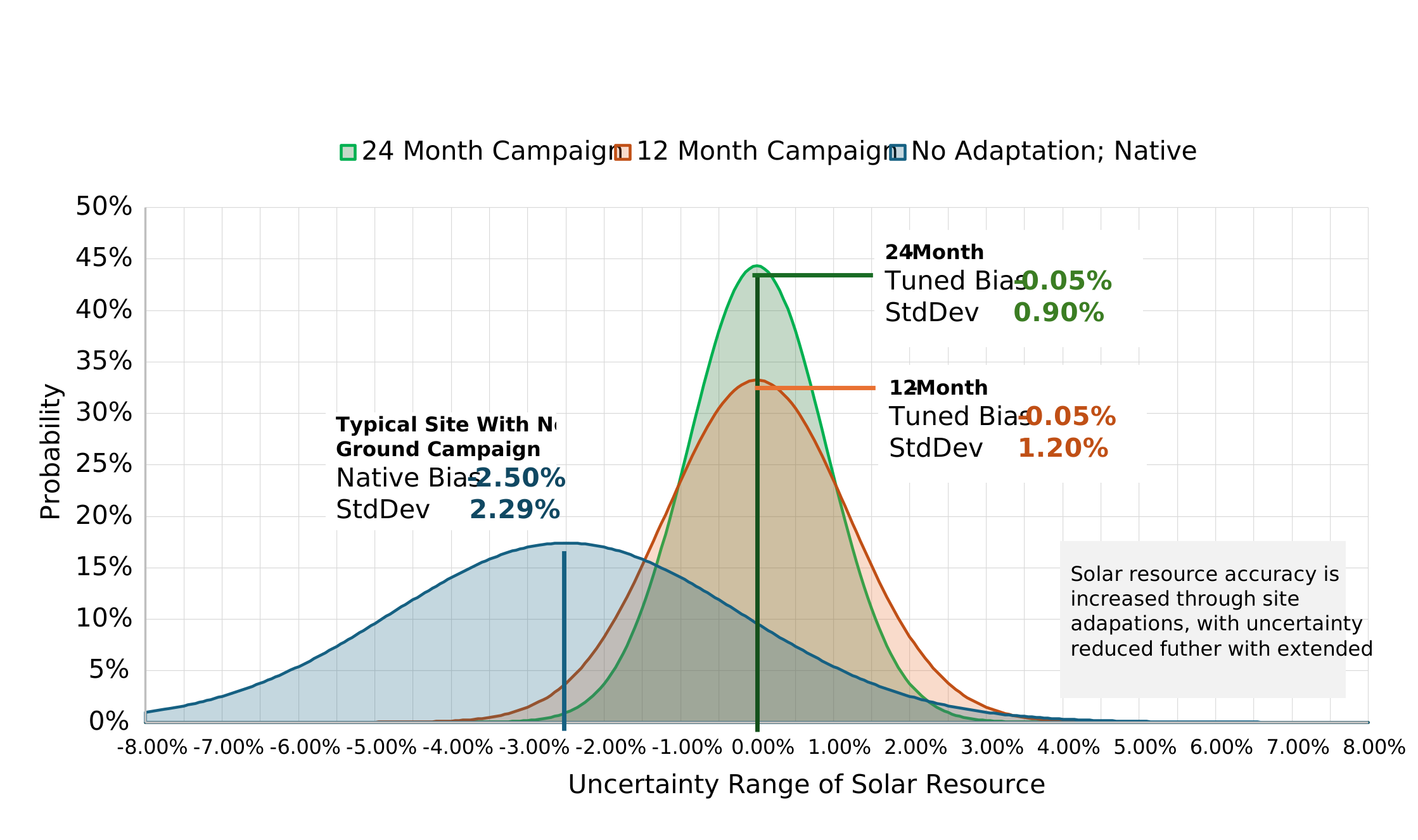
Example: Uncertainty reduction obtained with a campaign length of 12 and 24 months relative to native SolarAnywhere Data Version 4.0 from Clean Power Research
A simple example: Turning uncertainty reduction into financial value
We’ll use a simplified, hypothetical utility‑scale solar project to illustrate how a SolarAnywhere Site‑Adaptation Study can help reduce solar resource uncertainty, and improve downside cash flow and debt coverage. This simplified example holds all non‑resource assumptions constant and focuses solely on how changes in solar resource uncertainty affect the downside (P90) case. It is intended to illustrate the mechanism—not replicate a full project finance model.
Assumptions (illustrative only):
- 150 MWdc PV project in Texas
- PPA price: $40/MWh
- Annual debt service: $10.0M
- Target DSCR (P50): 1.25×
These assumptions establish a baseline P50 cash flow and debt service level. The example below focuses on how changes in uncertainty affect the downside (P90) case, rather than the average (P50) outcome.
Before Site-Adaptation, higher solar resource uncertainty widens the gap between P50 (average) and P90 (downside) energy and revenue estimates. Because lenders evaluate risk using the more conservative P90 (or often P99) case, higher uncertainty directly constrains downside cash flow and debt coverage.
Pre Site-Adaptation (higher uncertainty):
- Solar resource uncertainty (σ): 2.29%
- P90 cash flow available for debt service: $12.13M
- P90 DSCR: 1.21×
After a Site‑Adaptation Study reduces uncertainty—often without materially changing the average resource—the downside (P90) estimate improves.
Post Site-Adaptation (lower uncertainty):
- Solar resource uncertainty (σ): 1.20%
- P90 cash flow available for debt service: $12.31M
- P90 DSCR: 1.23×
That improvement translates to approximately $175,000 per year of additional downside cash flow and a ~0.02× increase in P90 DSCR, driven purely by reduced uncertainty. Put differently, the P50–P90 gap narrows through improved confidence in the resource estimate—not changes in interannual variability.
This matters because even small improvements in downside DSCR (e.g., 0.02–0.05×) can have meaningful financing implications, including:
- Increased allowable debt or tighter debt sizing
- Lower interest rates or improved pricing terms
- Reduced equity requirements
- Greater lender confidence in downside scenarios
The key takeaway isn’t the exact numbers—it’s the mechanism. By reducing solar resource uncertainty, Site‑Adaptation Studies narrow the gap between P50 and P90 outcomes, improving confidence in downside cash flows and increasing overall financing flexibility.
A new, enhanced Site‑Adaptation report experience
To make Site‑Adaptation insights clearer, more transparent and easier to apply, we’ve launched a new and improved SolarAnywhere Site‑Adaptation report template. The updated report provides clear visibility into methodology, results and their implications for project risk and long‑term performance—supporting informed decisions across the project lifecycle.
Key enhancements include:
- Richer visualization of spatial and temporal variability – New figures show the variation of average daily GHI across the surrounding region, average hourly GHI by month and hour of day, average daily GHI by month and year and interannual variability of temperature. This helps stakeholders see not just average conditions, but the variability that drives financial risk.
Figure 2: Variation of Average Daily Solar Insolation (GHI) in 9 km x 9 km Grid (kW/m2)
| Parameter | GHI Value (kWh/m2/day) |
|---|---|
| Minimum Average Day of Grid | 4.580 |
| Maximum Average Day of Grid | 4.560 |
| Average Day of Grid | 4.571 |
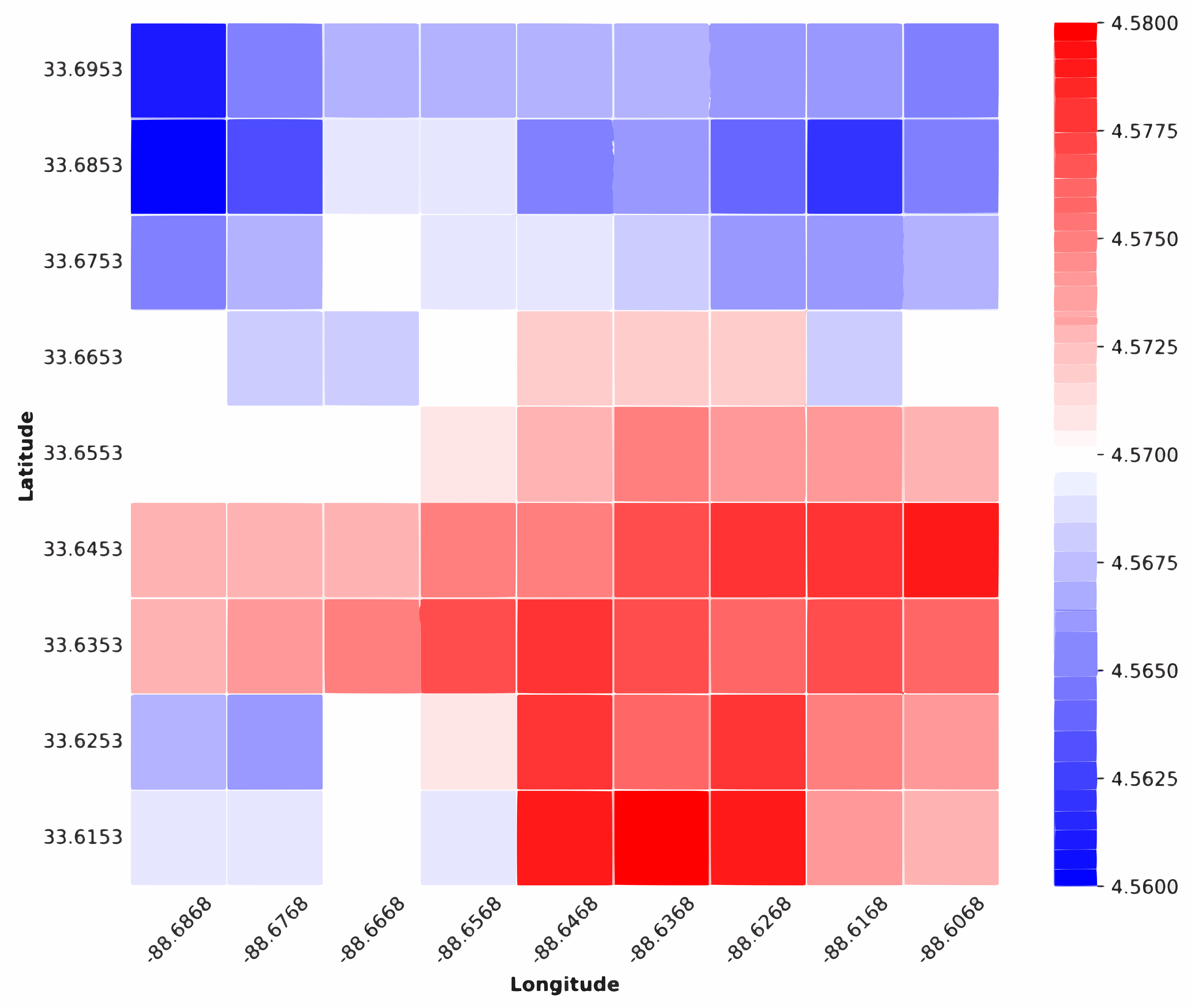
Figure 2 displays the average daily GHI of the surrounding 9 km x 9 km region, with the center square representing the 1 km x 1 km SolarAnywhere satellite tile used for the analysis and the location of the MET station. Understanding the variability of the surrounding area can help customers understand how representative the location of the MET station is to the surrounding area. This information can inform if it would be beneficial to run multiple ground campaigns for large or nearby projects.
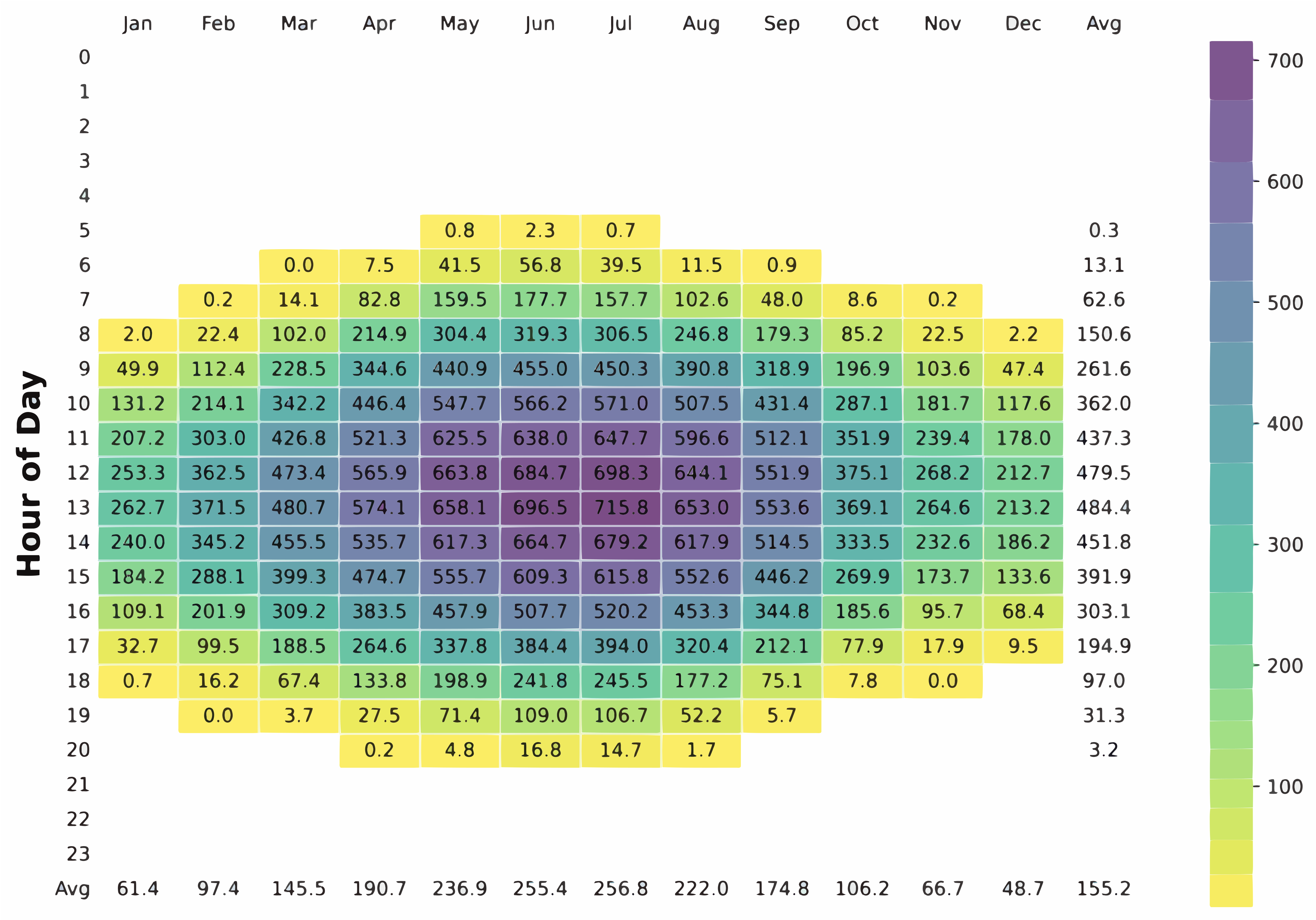
The heatmap above (Figure 3) shows the daily GHI variation over the course of each month. Additional figures displaying monthly GHI variation over each year of the 28-year tuned historical dataset, and DNI figures are also present in the report.
- Greater transparency into methodology and uncertainty – including clearer explanations of the site‑adaptation process, uncertainty, interannual variability, error metrics and probability‑of‑exceedance concepts, along with a comprehensive glossary to make the report more accessible to non‑technical audiences.
- Improved design and usability – featuring cleaner layouts, more consistent figure styling and a more intuitive flow from methodology to results to risk interpretation—making the report easier to review, share and trust.
Together, these enhancements provide a clearer, more finance‑ready view of site‑specific solar resource risk and uncertainty.
A smarter approach to solar resource risk
In today’s market, success isn’t about maximizing solar resource—it’s about minimizing uncertainty.
SolarAnywhere Site-Adaptation Studies provide a proven, data‑driven way to reduce solar resource risk, strengthen energy models and support smarter financial decisions. With the launch of the enhanced SolarAnywhere Site Adaptation report, those insights are now clearer and more actionable than ever.
Want to learn more?
If you’re interested in reducing uncertainty and strengthening confidence in your solar resource assessments, learn more about SolarAnywhere Site-Adaptation Studies or talk with our team about how they can support your next project.